
Choosing door finishes: matte, high gloss, wood grain
Ocean Cabinetry ·
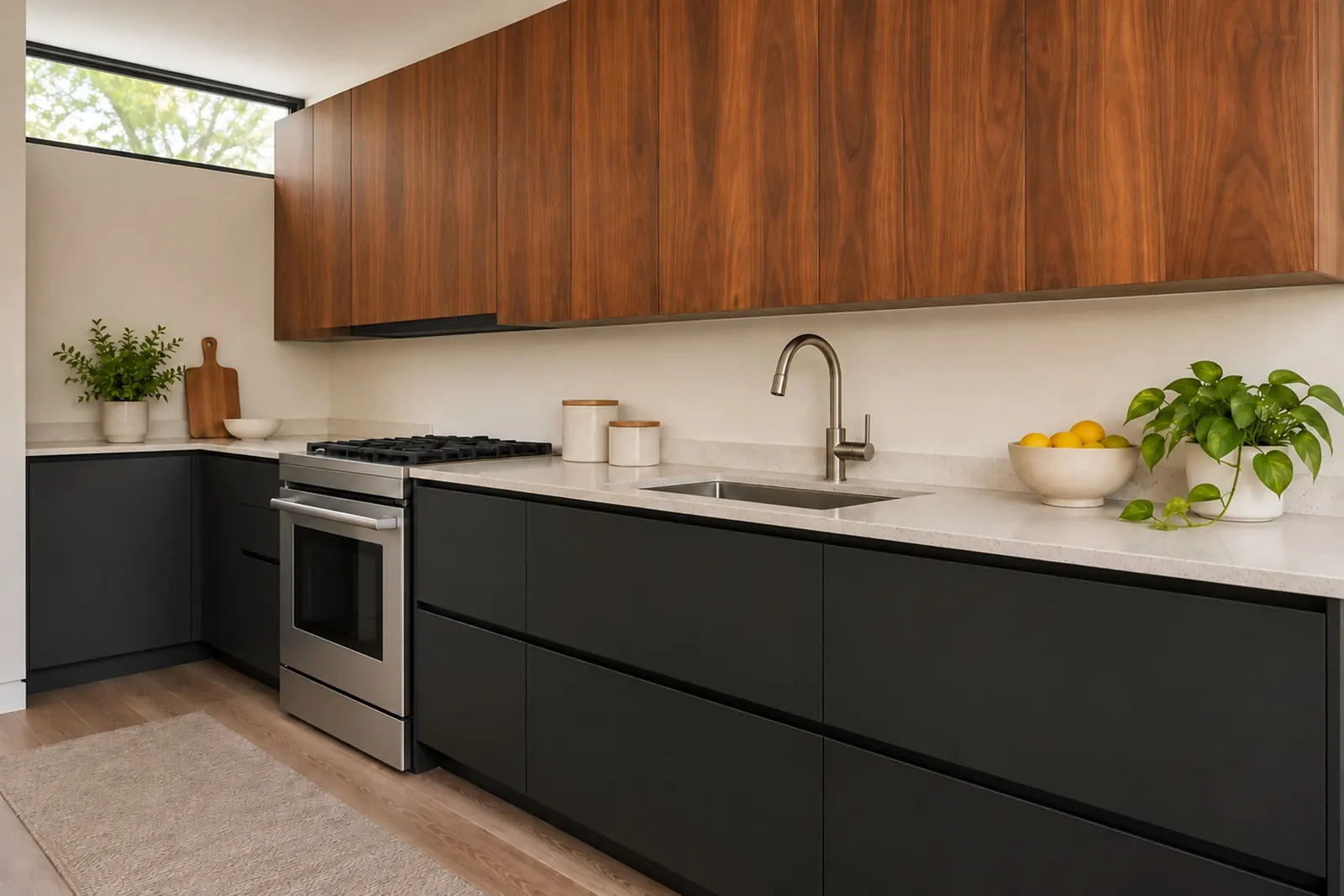
On a frameless kitchen, the doors are almost all you see. The finish sets the mood of the room, how it ages and how much cleaning it needs. Here is how the main finishes compare.
What the finishes are
Our doors come in more than 90 colors across a few families:
- Matte and high-gloss solid colors on our own flat-panel doors, with a combination core so screws for handles and hinges hold tight, and edges banded to match.
- PET-faced panels: a durable surface that resists scratches, UV light and fading, with many colors offered in both gloss and matte.
- Wood-grain and textured panels: decor finishes with the look and feel of wood or a textured surface.
How the finishes compare
Matte
Matte finishes absorb light instead of reflecting it, so they read as calm and modern and hide minor surface marks well. They suit handle-free kitchens and pair well with wood-grain accents. Fingerprints show less than on gloss, though dark matte colors can show smudges on lighter-touch areas; wipe with a soft, damp cloth. Matte whites and soft greys are a common choice for kitchens meant to last through changing tastes, and darker matte colors make a strong statement on an island or a single run.
High gloss
High-gloss doors reflect light and make a small kitchen feel brighter and larger. They give a sleek, contemporary look, especially in white and light colors. The trade-off is that gloss shows fingerprints, smudges and fine scratches more readily, so it suits clients who don't mind wiping doors down. A soft microfiber cloth is the right tool. Gloss also shows the flatness of the doors and the evenness of the gaps more than any other finish, so careful installation and hinge adjustment pay off most on a gloss kitchen.
Wood grain and textured
Wood-grain finishes bring warmth to a flat-panel kitchen without the movement and upkeep of solid wood. Many designers use them on an island, a run of base cabinets or a single tall wall, against white or grey cabinets elsewhere. Textured finishes add a surface you can feel, which also hides fingerprints. Keep the same wood-grain finish across a run and its end panels, so the run reads as one surface.
Choosing for the project
- Who will use it. Busy family kitchens and rentals favor matte, textured and wood grain, which forgive daily wear. Gloss suits clients who like a polished look and don't mind upkeep.
- Light in the room. Gloss brightens a dark kitchen; matte calms a bright one.
- One finish, every room. The same doors run through kitchen, bath, laundry and closet, so a finish can carry through a whole home or building.
- Two-tone. A darker or wood-grain base with lighter wall cabinets is a common way to add depth without crowding a small space.
- See it in person. Colors on screen and in print are a guide. Approve the finish on a physical sample in the room's light before ordering.
- Handles or handle-free. Matte and wood grain suit handle-free doors with finger-pull edges or push-to-open; gloss looks cleanest with slim pulls or handle-free fronts. Decide this with the finish, because it changes how the doors are ordered.
- Edges and panels. Finished end panels and fillers are available in all our colors, so the sides and ends of the runs match the fronts.
Mixing finishes
Two finishes in one kitchen work best when one clearly leads. Keep the larger area, usually the wall cabinets or the perimeter, in the quieter finish, and use the stronger one on the island, the base cabinets or a single tall wall. Repeat the second finish somewhere else in the room, such as open shelves or a tall panel, so it looks planned rather than accidental. Keep to two finishes plus the countertop; a third finish in a small kitchen tends to look busy. If the home has a matching vanity or closet, carry one of the two kitchen finishes into it so the rooms relate. When the client can't decide, put the two physical samples side by side on the countertop sample and look at them in daylight and in the evening.
Care for any finish
- Clean with a soft cloth and mild soap and water, then dry.
- Avoid abrasive cleaners, chlorine-based or acidic cleaners, scouring sponges and steel wool; they can dull or damage any finish.
- Wipe up water and steam around sinks and dishwashers promptly.
- Keep the room between 50 and 85°F and 30 to 55% relative humidity.
Browse the full color range, then approve your finish on a physical sample.
Related
- Door colors
- Gallery
- For designers
- Frameless vs. framed cabinets: what dealers and contractors should know
- Planning cabinets for multifamily projects
- Standard frameless cabinet sizes
- How to plan a closet system
- How ordering through the dealer portal works
- How to order frameless cabinets wholesale
- Frameless cabinet construction explained: box, back, toe kick, hardware
- Cabinet lead times: what affects them and how to plan a job
- Kitchen cabinet sizes for apartments and small kitchens
- Bathroom vanity sizes and configurations